
February 19, 2026

As more Victorian households invest in solar power and battery storage, choosing the right solar inverter has become just as important as selecting quality...

Hot water heat pumps are one of the most efficient and eco-friendly ways to heat water for Melbourne homes. By using the surrounding air to generate heat, these systems can reduce your energy consumption by up to 70% compared to traditional electric or gas water heaters.
However, even the best system can perform poorly if not installed correctly. At Melbourne Aircon Specialist, we’ve seen how small installation errors can lead to higher running costs, reduced lifespan, and unnecessary maintenance issues.
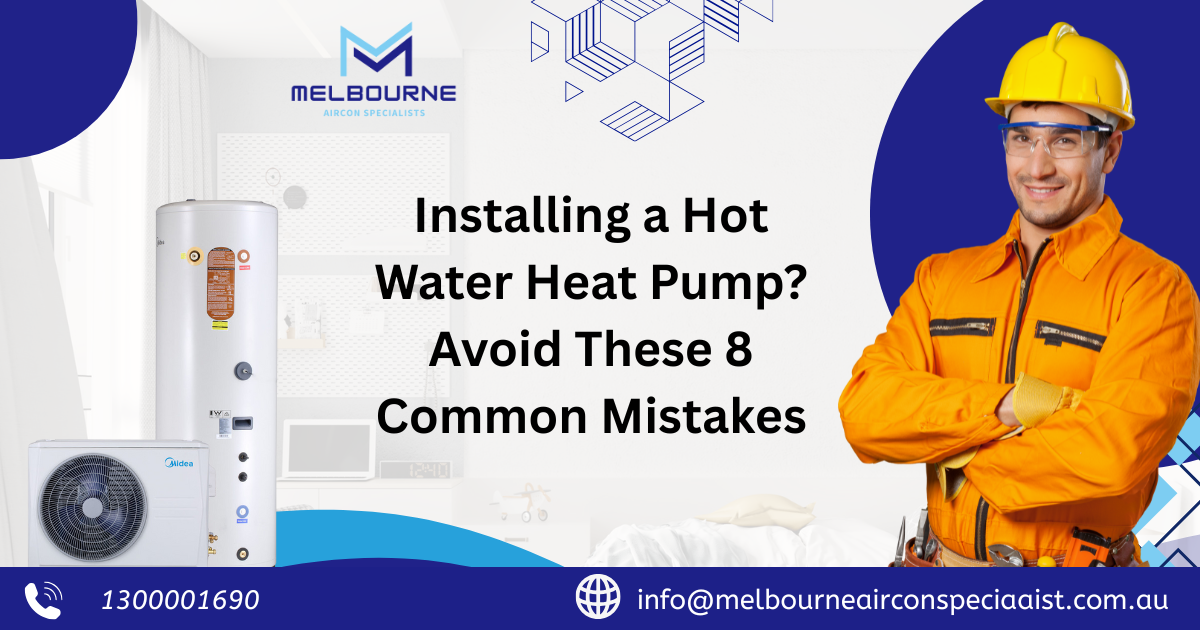
To help you get the most out of your new hot water heat pump, Installing a Hot Water Heat Pump? Discover the 8 most common installation mistakes and how to avoid them. Get Free Quote— and how to avoid them.
Insulating all hot water pipes, valves, and fittings is essential. Without it, your system loses heat rapidly, forcing the pump to work harder and increasing your energy bills.
💡 Pro Tip: If the pipe feels hot to touch, it needs insulation!
Every heat pump has two drains — one for overflow and one for condensate. Poor installations often allow these to drain straight onto the floor, which can cause flooding, corrosion, or slip hazards.
✅ Always ensure both drains are connected to a dedicated drainage point with an air gap to prevent backflow.
🚫 Never allow drains to terminate near electrical outlets.
Most tanks (unless stainless steel) contain a sacrificial anode that prevents internal corrosion. This anode needs to be replaced every few years, depending on the model.
Heat pumps often require a dedicated, hard-wired circuit installed by a licensed electrician. Plugging them into a shared power point can cause tripping or inconsistent operation.
✅ Ensure your installer provides a lockable isolator switch and dedicated wiring.
⚡ While some all-in-one models allow a 10A plug, split systems must always be hard-wired according to manufacturer requirements.
Loose cables around the unit can pose safety risks, especially near water.
✅ Use cable clips or conduit to keep wiring neat and secure.
✅ Avoid running cables near drains or water outlets.
A tidy installation not only looks professional but also prevents long-term hazards.
A stable, level base is vital for your tank’s longevity and performance.
Placing it directly on soil or uneven ground can lead to corrosion and imbalance.
✅ Install the tank on a concrete or paver slab that supports the entire base.
💨 For outdoor units, consider a rippled base that allows airflow under the tank to prevent moisture buildup.
Heat pumps need airflow to operate efficiently. Installing the unit too close to walls or corners restricts ventilation and strains the compressor.
✅ Follow the manufacturer’s clearance guidelines:
Also, ensure there’s easy access for future servicing — including filter cleaning and fan inspection.
Many heat pumps include timers that let you heat water when energy is cheapest — especially if you have solar panels or an off-peak tariff.
✅ Set your timer to run between 11 am and 3 pm to make the most of solar power.
✅ For households using more hot water overnight, schedule a low-tariff boost between 1 am–5 am.
A properly set timer can cut your energy costs even further without compromising comfort.
A textbook installation from Melbourne Aircon Specialist always includes:
✔ Proper insulation on all hot water pipes and valves
✔ Secure drainage with correct air gaps
✔ Clear access for anode replacement
✔ Dedicated electrical wiring
✔ Clean, tidy cabling
✔ A level, corrosion-resistant base
✔ Adequate airflow and clearance
✔ Timer setup for efficient operation
With professional installation, you’ll enjoy a system that performs efficiently, lasts longer, and complies fully with Victorian plumbing and electrical standards.
✅ Accredited installers experienced in hot water heat pumps
✅ VEU rebate assistance for eligible Victorian homeowners
✅ Expertise in air conditioning, hot water, and heat pump systems
✅ Reliable installations backed by compliance and workmanship guarantees
We make energy efficiency easy, affordable, and fully compliant — so your home runs smarter, cleaner, and more comfortably.
📞 Call 1300 001 690
📧 info@melbourneairconspecialist.com.au
🌐 melbourneairconspecialist.com.au
Melbourne Aircon Specialist – Professional Heat Pump Installation for a Sustainable Melbourne Home.
Installing a Hot Water Heat Pump? Discover the 8 most common installation mistakes and how to avoid them. Get Free Quote
As more Victorian households invest in solar power and battery storage, choosing the right solar inverter has become just as important as selecting quality...

Older homes across Victoria have character, charm, and solid craftsmanship — but when it comes to heating and cooling, many weren’t designed for modern...
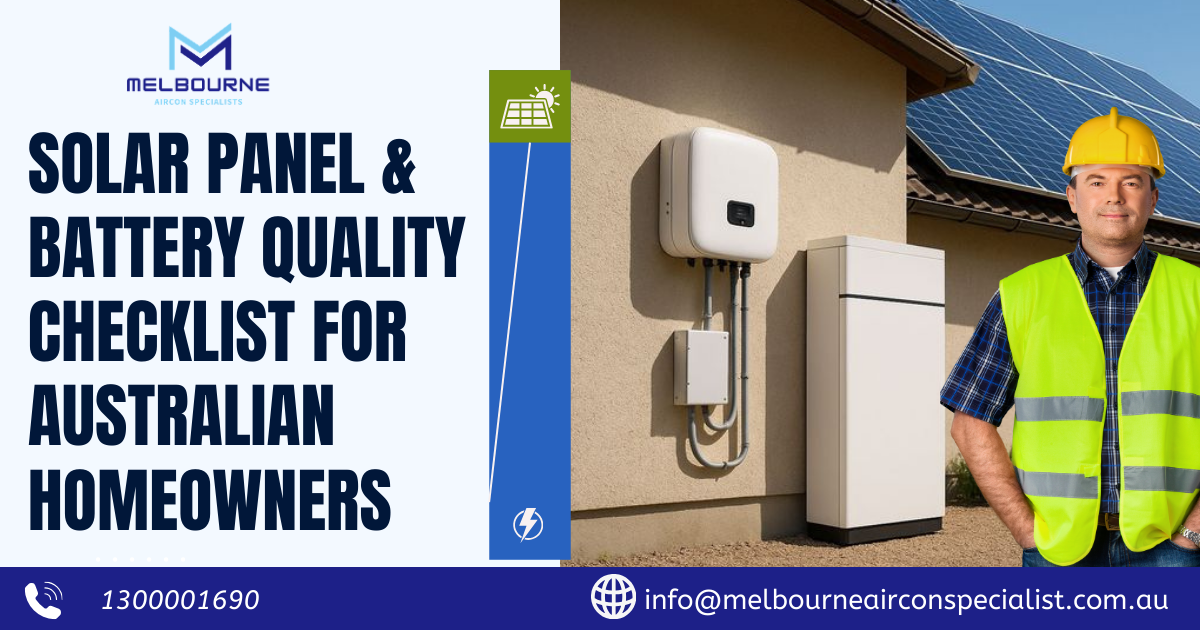
Australia has one of the highest rooftop solar adoption rates in the world. With electricity prices continuing to rise, more Melbourne households are pairing...